
.jpg)
Logistics & Supply Chain Insights
Expert perspectives, compliance updates, and global freight strategies from our team in Los Angeles.
Air & Ocean Freight Intelligence
Stay ahead of regulatory changes, port developments, and market trends.
Customs & Drayage Solutions
Practical advice for optimizing domestic trucking, drayage, and customs clearance.
Choosing the best FCL Freight Shipping option from China depends on more than the lowest ocean rate. Your cargo type, container size, destination port, delivery schedule, and customs readiness all affect the final decision. A route that looks cheap online may create higher costs through storage, delays, or unexpected destination charges.
FCL means Full Container Load, where one shipper uses the container’s space exclusively. It suits businesses moving pallets, machinery, furniture, or large product batches. A 20-foot container may fit heavy goods efficiently, while a 40-foot or 40-foot high-cube container offers more volume. The right choice depends on cargo weight and dimensions, not guesswork.
Reliable planning begins with accurate commercial invoices, packing lists, HS codes, and verified shipping instructions. Experienced freight teams compare major Chinese ports, including Shanghai, Ningbo, Shenzhen, Qingdao, and Xiamen. They also review sailing frequency, transit time, transshipment risks, and inland transportation before booking.
There is no universally perfect route. That matters.
A dependable provider should explain Incoterms, insurance options, port fees, container availability, and customs responsibilities in plain language. Professional advice should be supported by current carrier schedules and transparent quotations. Regulations and freight conditions can change quickly, so old rate sheets are not enough.
This guide examines practical FCL Freight Shipping choices from China. It considers cost, speed, cargo safety, documentation, and destination delivery. Some recommendations may require adjustment. Real shipments rarely follow a perfect plan, and careful review remains essential.
What FCL Freight Shipping from China Means
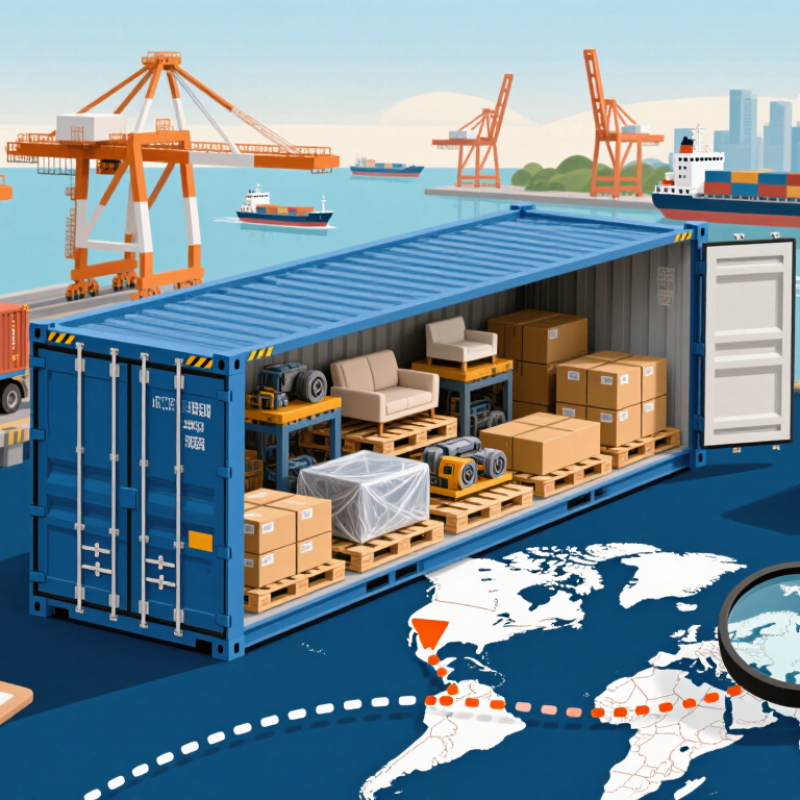
What does FCL freight shipping from China mean? FCL means Full Container Load. One shipper reserves the container, loads the cargo, and seals the doors. The box may be 20-foot, 40-foot, or high-cube equipment. It does not need to be completely full. That point is often misunderstood.
FCL usually reduces shared-container handling, so cartons move through fewer consolidation points. This can reduce damage exposure and simplify counting, especially for pallets, machinery, or repeated purchase orders. UNCTAD’s Review of Maritime Transport 2024 states that over 80% of global merchandise trade by volume moves by sea. Port choice, sailing frequency, and inland delivery therefore matter as much as the ocean leg. A shipping plan is not only a sea booking.
The World Bank’s Logistics Performance Index 2023 compares 139 economies through customs, infrastructure, shipment arrangements, logistics quality, tracking, and timeliness. These measures explain why the best FCL option is not automatically the lowest quoted rate. Compare total landed cost, including origin pickup, export handling, ocean freight, destination charges, duty, and final delivery. Confirm verified container weight, seal details, cargo dimensions, and cut-off times before loading. Small omissions create expensive delays. I would question an FCL booking when inventory is too light. Unused cubic space can cost more than a shared shipment. That is an uncomfortable calculation, but it is the honest one.
| FCL Shipping Dimension | 20-Foot Standard Container | 40-Foot Standard Container | 40-Foot High-Cube Container | Best Selection Guidance |
|---|---|---|---|---|
| Typical external size | Approximately 6.06 m long × 2.44 m wide × 2.59 m high | Approximately 12.19 m long × 2.44 m wide × 2.59 m high | Approximately 12.19 m long × 2.44 m wide × 2.90 m high | Choose according to cargo volume, loading height, weight, and destination handling restrictions. |
| Approximate internal volume | 33 cubic meters | 67 cubic meters | 76 cubic meters | A high-cube unit provides roughly 13% more internal volume than a standard 40-foot unit. |
| Approximate internal dimensions | 5.90 m long × 2.35 m wide × 2.39 m high | 12.03 m long × 2.35 m wide × 2.39 m high | 12.03 m long × 2.35 m wide × 2.69 m high | Confirm the exact container specifications before loading because dimensions can vary by equipment series. |
| Common maximum payload | Approximately 25,000–28,000 kg | Approximately 25,000–28,000 kg | Approximately 25,000–28,000 kg | The permitted payload depends on container tare weight, carrier rules, road regulations, and the shipment route. |
| Recommended cargo volume | About 18–28 cubic meters | About 40–58 cubic meters | About 50–68 cubic meters | Allow space for packaging irregularities, loading access, bracing, and safe weight distribution. |
| Best suited cargo | Dense, heavy, or compact cargo; machinery; metal products; boxed goods with high weight per cubic meter | Large shipments with moderate density; furniture; packaged consumer goods; consolidated purchase orders | Lightweight, bulky, or tall cargo; cartons; garments; assembled products; cargo requiring additional vertical space | The best container is usually the smallest unit that safely accommodates the cargo without exceeding weight limits. |
| Loading capacity by standard pallets | Approximately 10–11 standard pallets or 20–22 euro pallets | Approximately 20–21 standard pallets or 40–44 euro pallets | Approximately 20–21 standard pallets or 40–44 euro pallets | Actual pallet quantity depends on pallet dimensions, orientation, overhang, packaging, and whether pallets can be double-stacked. |
| Typical cargo weight consideration | Often preferred when the cargo may reach the road or container weight limit before using all available space | Suitable when cargo volume is the primary constraint and total shipment weight remains within route limits | Suitable for high-volume cargo that is relatively light; additional height does not increase the legal payload limit | For heavy cargo, calculate both cubic volume and gross weight before choosing the container size. |
| Space utilization target | Approximately 75%–90% of usable volume | Approximately 75%–90% of usable volume | Approximately 75%–90% of usable volume | Leaving modest free space can reduce loading damage and make cargo securing more effective. |
| FCL meaning | Full Container Load means one shipper generally books the use of an entire container, even when the cargo does not physically fill every cubic meter. | FCL can reduce cargo handling and cross-shipment exposure compared with shared-container shipping. | ||
| Main cost components | Ocean freight, origin handling, documentation, export customs processing, terminal charges, destination handling, import clearance, inland delivery, and applicable surcharges | Container size alone does not determine the final price; route, season, port pair, cargo characteristics, and service terms also affect the total cost. | ||
| Typical shipping timeline | A practical door-to-door planning window is often about 4–8 weeks, including cargo preparation, export processing, ocean transit, destination clearance, and final delivery. | Actual transit time varies by origin city, destination, service type, port congestion, customs inspection, weather, and inland transport availability. | ||
| Key booking information required | Cargo description, number of cartons or pallets, dimensions, gross weight, total volume, loading location, destination, cargo value, and any regulated-goods details | Accurate measurements help prevent rebooking, storage charges, loading delays, and unexpected weight-related restrictions. | ||
| Overall best choice | The best FCL option is the container type that meets the cargo's volume and height requirements while remaining within payload, road-weight, and destination handling limits. | For dense cargo, start with a 20-foot unit; for larger shipments, compare a 40-foot standard unit with a 40-foot high-cube unit based on volume and height. | ||
FAQS
FCL suits cargo needing a dedicated container. It can reduce handling between different shipments. Measure pallets, cartons, height, weight, and loading order carefully. More space does not always mean better use.
Use a standard dry container for ordinary boxed goods. Choose a high-cube container when vertical space matters. Check payload limits before booking. A 40-foot container may lower cost per cubic meter.
Refrigerated equipment suits cargo needing stable temperatures. Leave enough space for air circulation. Record the required temperature range clearly. Small loading mistakes can damage sensitive goods.
Open-top or flat-rack equipment may support tall, wide, or heavy pieces. These options need detailed dimensions and extra planning. Confirm availability and handling requirements in writing. Costs may rise quickly.
Direct services usually involve fewer transfers and less handling. Transshipment routes may cost less but can add waiting time. Rail-sea and short-sea options may fit certain destinations. Compare time, risk, and total cost.
Costs include ocean freight, trucking, terminal handling, documents, customs-related fees, and delivery. Storage or detention charges may appear later. Compare three detailed quotes when possible. The cheapest ocean rate can mislead.
Ocean transit may take about 15 to 35 days. Door-to-door delivery can take roughly 25 to 50 days. Port congestion, weather, inspections, and peak seasons may extend the schedule. Build a five-to-seven-day buffer.
Confirm internal dimensions, payload limits, cutoff times, equipment availability, and transfer details. Share the delivery address and accurate cargo measurements. Ask whether the quote is port-to-port or door-to-door. Written confirmation helps, though it cannot prevent every delay.
Conclusion
FCL Freight Shipping from China is a practical solution for businesses that need to move a full container of goods efficiently and securely. This shipping method allows one shipper to use an entire container, reducing cargo handling and offering greater control over loading, packaging, and delivery schedules. Choosing the right container depends on factors such as cargo volume, weight, dimensions, temperature sensitivity, and special handling requirements. Standard, high-cube, refrigerated, and other suitable options may be considered according to the shipment’s characteristics.
Available services can include direct and transshipment routes to ports around the world, with choices between standard, expedited, and multimodal transportation. Total costs and transit times are influenced by container size, origin and destination ports, seasonal demand, fuel charges, customs procedures, and inland transportation. To manage a shipment effectively, businesses should prepare accurate documents, confirm booking details, monitor shipment milestones, and maintain communication with the freight provider. Careful planning helps reduce delays, control expenses, and ensure a smoother international delivery process.
