
U.S. Customs Compliance & Trade Architecture

Customs Brokerage Services & Global Trade Compliance Blueprint

Navigating U.S. Customs clearance, HTS code tariff engineering, ISF 10+2 compliance, and Partner Government Agency (PGA) regulations with 20+ years of operational mastery from Los Angeles to global supply chain destinations.

20+ Years Customs Experience
100% CBP & PGA Compliance Rate
48 States Integrated Drayage
TSA Approved Forwarder & Brokerage

End-to-End Customs Brokerage Services & Regulatory Scope

Customs clearance is not merely administrative paperwork—it is a critical financial and operational node in global procurement. Our in-house licensed customs brokerage framework ensures your cargo moves past U.S. Customs and Border Protection (CBP) swiftly, legally, and cost-effectively.

U.S. CBP Entry Clearance (Types 01, 11, 86)

We manage formal and informal entries, Section 321 Type 86 e-commerce entries, and complex customs entry summaries (CBP Form 7501). From immediate cargo release notifications (CBP Form 3461) to final liquidation, our brokers ensure zero supply chain friction at all U.S. ports of entry.

ISF (Importer Security Filing 10+2)

Ocean freight imports require mandatory ISF filings at least 24 hours prior to vessel loading overseas. We execute precise 10+2 filings to guarantee complete compliance, safeguarding your business against costly $5,000 CBP liquidated damages per violation.

HTS Classification & Tariff Engineering

Incorrect Harmonized Tariff Schedule (HTSUS) classifications lead to overpaid duties or severe penalties under 19 U.S.C. 1592. Our trade specialists conduct comprehensive line-item audits, General Rules of Interpretation (GRIs) analysis, and Binding Ruling requests (CBP Form 435).

PGA Regulatory Integration

Smooth customs clearance requires coordination beyond CBP. We hold extensive expertise in clearing goods subject to Partner Government Agencies, including FDA (Prior Notice & FSVP), EPA (TSCA certification), USDA (APHIS permits), FCC, and CPSC mandates.

Continuous & Single Entry Customs Bonds

Every commercial import into the U.S. requires a legal Customs Bond to secure duty payment. We issue Continuous Customs Bonds ($50,000 minimum) and Single Entry Bonds tailored to your import volume, optimizing operational liquidity and clearance speed.

Section 301 Mitigation & Duty Drawback

Navigate heavy China Section 301 tariffs, Section 232 steel/aluminum duties, and Anti-Dumping/Countervailing Duties (AD/CVD). We assist with tariff exclusions, foreign trade zone (FTZ) entries, and Duty Drawback recovery of up to 99% of duties on re-exported goods.

Why Customs Brokerage Services Determine Global Sourcing Success

For modern procurement officers, supply chain managers, and global enterprise directors, international freight is no longer just about ocean container rates or transit times. The true bottleneck of international procurement resides at the customs border.

A single misclassified 10-digit Harmonized Tariff Schedule (HTS) number, an omitted Partner Government Agency (PGA) declaration, or a late Importer Security Filing (ISF) can trigger immediate Customs hold notices, VACIS non-intrusive container exams, demurrage charges exceeding thousands of dollars per day, or complete cargo seizure.

At Recommended Cargo Logistics, our licensed customs brokers in Los Angeles combine over 20 years of operational experience with advanced electronic data interchange (EDI) connections directly to the CBP Automated Commercial Environment (ACE) portal. We transform customs clearance from a vulnerable risk point into a strategic competitive advantage.

Customs brokerage paperwork and trade documentation analysis by Recommended Cargo Logistics

The Technical Anatomy of U.S. Customs Clearance

Understanding how U.S. Customs & Border Protection processes inbound international shipments is essential for risk mitigation. When cargo arrives at primary entry hubs such as the Port of Los Angeles, Port of Long Beach, or LAX International Airport, it undergoes a rigid multi-tier regulatory evaluation:

1. Electronic Manifest & Entry Summary Generation

Before cargo physically arrives, our brokerage team transmits the Entry Summary (CBP Form 7501) along with the Entry/Immediate Delivery (CBP Form 3461). This data packet includes detailed invoice values, currency conversion rates, country of origin metrics, manufacturer identification codes (MID), and duty calculations based on the HTSUS.

2. Partner Government Agency (PGA) Cross-Clearance

Customs clearance is rarely isolated to CBP. Depending on the product category, goods must satisfy stringent regulatory mandates from secondary federal bodies:

  • FDA (Food and Drug Administration): Requires electronic Prior Notice filings for medical devices, cosmetics, food, and pharmaceuticals. Medical imports necessitate foreign facility registration numbers and Device Initial Exporter listings.
  • EPA (Environmental Protection Agency): Regulates chemical imports under the Toxic Substances Control Act (TSCA) and vehicle engines under the Clean Air Act.
  • USDA (United States Department of Agriculture): Mandates phytosanitary certificates for agricultural products and wood packaging material (WPM) compliance under ISPM 15 standards.
  • CPSC (Consumer Product Safety Commission): Inspects children’s toys, apparel, and electronics for Certificate of Conformity (CPC) standards.

Information Gain: How to Avoid Demurrage & Storage Penalties During CBP Inspections

When CBP flags a container for an exam (Intensive, Tailgate, or VACIS/NII Gamma-Ray), shipping lines charge daily demurrage fee tariffs ($200–$600/day) while port terminals charge storage. Recommended Cargo Logistics mitigates these fees by deploying pre-lodged entry summary filings, pre-arranged port drayage container holds, and maintaining direct communication with CET (Customs Examination Terminals) in Los Angeles.

Global Procurement Trends: The Future of Customs & Trade Compliance (2025–2030)

As global procurement structures evolve under macroeconomic shifts, supply chain executives must adapt to rapid regulatory developments. Sourcing strategy is no longer governed solely by FOB costs—it is dictated by tariff compliance, ESG mandates, and automated digital customs clearance frameworks.
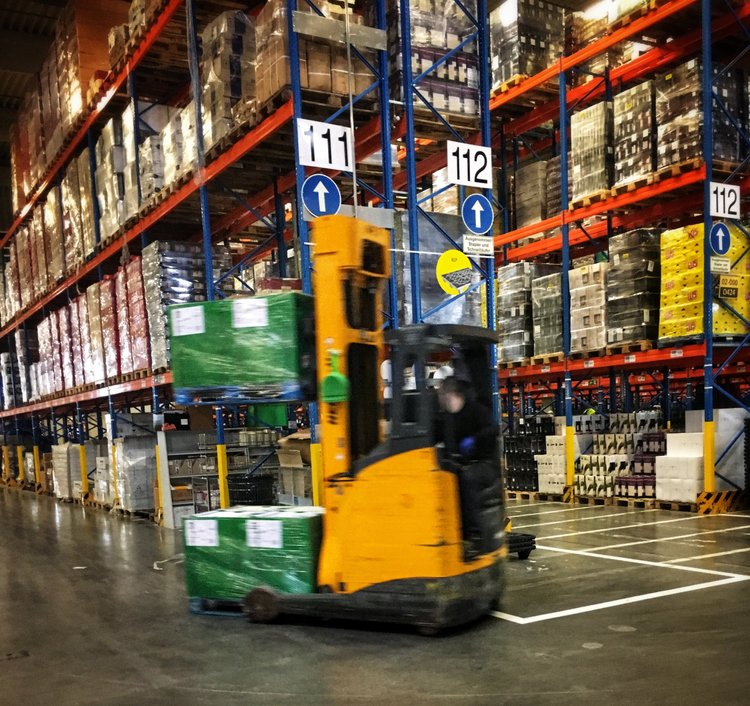
Modern bonded warehouse interior showing automated container transloading and customs storage

Trend 1: AI-Driven Automated HTS Classification & Compliance Audits

Customs authorities worldwide are integrating machine learning algorithms into the ACE portal to detect anomalies in invoice valuations, HTS code discrepancies, and origin misdeclarations. AI-driven compliance monitoring means importers can no longer rely on legacy product classifications. Enterprise procurement must adopt real-time tariff engineering and continuous classification audits to stay ahead of automated CBP audit flags (CF-28 Request for Information).

Trend 2: Supply Chain Realignment, Nearshoring & Rules of Origin (USMCA & CAFTA-DR)

To reduce dependence on single-source manufacturing regions, global enterprises are shifting procurement to Latin America (nearshoring in Mexico) and Southeast Asia. However, leveraging duty-free or preferential tariff rates under trade agreements such as the USMCA (United States-Mexico-Canada Agreement) requires rigorous operational compliance. Importers must maintain verified Certificates of Origin, detailed Bill of Materials (BOM) breakdowns, and Regional Value Content (RVC) calculations to withstand CBP retrospective audits.

Trend 3: Environmental Compliance & Carbon Border Adjustment Mechanisms (CBAM)

Decarbonization is directly intersecting with customs policy. Border control agencies are implementing carbon footprint reporting requirements and import sustainability enforcement. Products manufactured using carbon-intensive processes will soon face carbon tax adjustments at border clearance points. Forward-thinking procurement teams are integrating scope 3 carbon metrics into their customs entry documentation.

Trend 4: Regulatory Overhaul of De Minimis (Section 321) & E-Commerce Imports

The historical $800 duty-free De Minimis exception under Section 321 is facing unprecedented regulatory scrutiny from U.S. lawmakers and CBP. New legislative proposals aim to restrict Section 321 eligibility for high-risk product lines, require formal Type 86 electronic data submissions, and mandate strict PGA compliance for cross-border e-commerce shipments. Businesses relying on direct-to-consumer fulfillment must establish robust customs brokerage frameworks to handle formal entries if De Minimis exemptions tighten.

Trend 5: Heightened Ethical Sourcing Verification (UFLPA Enforcement)

The Uyghur Forced Labor Prevention Act (UFLPA) establishes a rebuttable presumption that goods mined, produced, or manufactured wholly or in part in specific regions are prohibited from entry into the U.S. CBP enforcement requires importers to present exhaustive supply chain tracing evidence—from raw material extraction to final assembly—when cargo is detained. Professional customs brokerage services now encompass comprehensive supply chain mapping and compliance documentation audits.

Why Leading Global Importers Recommend Recommended Cargo Logistics

We bridge the gap between complex legal regulatory compliance and physical freight transportation, offering an unyielding commitment to your enterprise success.

20+ Years of Customs & Gateway Mastery

Rooted in the strategic hub of Los Angeles and City of Industry, CA, our team possesses over two decades of specialized expertise in resolving port bottlenecks, complex customs holds, and tariff disputes.

Dedicated Care & Family-Owned Integrity

Unlike massive, impersonal corporate freight conglomerates, we provide dedicated, high-touch operational accountability. You work directly with senior compliance experts who treat your cargo as their own.

Direct Communication Lines

No endless automated call centers, open-ended ticket queues, or departmental runarounds. You receive immediate, transparent updates, direct phone access, and real-time electronic customs tracking.

Seamless End-to-End Synergy

We do not just clear customs—we manage physical cargo execution. As a TSA-approved forwarder with complete Port Drayage, FTL/LTL Inland Trucking, Ocean (FCL/LCL), Air Freight, and Transloading assets, your logistics are unified.

Proactive Duty Engineering

We actively identify legal duty-saving opportunities, Section 301 exclusions, USMCA preferential entry options, and Duty Drawback opportunities, returning tangible capital back to your enterprise balance sheet.

Complete Risk Mitigation & Cargo Protection

From Continuous Customs Bonds to full-value Cargo Insurance coverage, we protect your organization from financial liability, regulatory penalties, and physical cargo loss during international transport.

Frequently Asked Questions on Customs Brokerage Services

Addressing complex regulatory queries, intent-driven compliance scenarios, and operational protocols for global importers.

What is the difference between a Freight Forwarder and a Customs Broker?

While both entities are crucial for international trade, their legal functions and operational scopes differ significantly:

A Freight Forwarder acts as the architect of physical cargo transportation. They arrange ocean freight (FCL/LCL), air freight, inland trucking, booking container space with ocean carriers, and coordinating port drayage.

A Customs Broker is a licensed professional regulated by U.S. Customs and Border Protection (CBP) empowered by federal law to prepare and submit customs entries, execute HTS classifications, calculate tariff duties, coordinate Partner Government Agency (PGA) clearances, and ensure full legal compliance with trade regulations.

Recommended Cargo Logistics functions as both a TSA-approved Freight Forwarder and an integrated Customs Brokerage provider, delivering an all-in-one supply chain solution under a single operational team.

What happens if an Importer Security Filing (ISF 10+2) is filed late or incorrectly?

The Importer Security Filing (ISF 10+2) is mandatory for all ocean cargo bound for the United States and must be electronically submitted to CBP at least 24 hours prior to the container being loaded onto the vessel at the foreign port of origin.

If an ISF is filed late, incomplete, or with inaccurate data (such as wrong manufacturer details or incorrect HTS numbers), CBP can issue an immediate $5,000 liquidated damages penalty per violation, up to a maximum of $10,000 per shipment. Furthermore, non-compliant shipments are subjected to automatic do-not-load orders, port holds upon arrival, and mandatory physical container examinations at the importer's expense.

How can importers legally minimize financial exposure to Section 301 tariffs?

Section 301 tariffs on products originating from China can impose additional duty rates ranging from 7.5% to 25% or higher. Importers can legally optimize their tariff exposure through strategic customs engineering:

  • HTS Re-Classification Audits: Reviewing product specifications under General Rules of Interpretation (GRIs) to determine if a secondary, lower-duty tariff classification accurately describes the merchandise.
  • Substantial Transformation & Origin Architecture: Adjusting manufacturing processes across secondary country supply chains (e.g., Vietnam, Mexico) so that the legal country of origin changes prior to U.S. entry.
  • First Sale Valuation: Utilizing the "First Sale Rule" to declare duty values based on the price paid by the foreign middleman to the original manufacturer, rather than the final markup price paid by the U.S. buyer.
  • Duty Drawback: Claiming up to a 99% refund on paid duties if imported goods are subsequently re-exported or destroyed under CBP supervision.
Why are Continuous Customs Bonds preferred over Single Entry Bonds for active importers?

All commercial imports valued over $2,500 require a U.S. Customs Bond to guarantee payment of duties, taxes, and fees. Importers have two bonding options:

Single Entry Bond (SEB): Covers only one individual shipment. The cost is calculated based on the shipment value plus duties and fees. If the cargo is subject to PGA requirements (such as FDA or EPA), the bond amount must equal three times the total value of the shipment, making SEBs cost-prohibitive for high-value goods.

Continuous Customs Bond: Covers all import entries conducted by the Importer of Record across all U.S. ports for a full 12-month period. A standard $50,000 Continuous Bond costs a fixed annual fee (typically $450–$600), speeds up customs release by eliminating per-shipment bond underwriting, and seamlessly accommodates PGA requirements without increasing bond coverage costs.

How does Los Angeles transloading prevent container demurrage and detention fees?

Port terminals in Los Angeles and Long Beach allow strict "free time" (typically 2 to 4 days) for importers to retrieve ocean containers after discharge before daily demurrage charges accrue. Simultaneously, steamship lines enforce strict container detention fees if empty ocean equipment is not returned to the port terminal within agreed window periods.

By utilizing Recommended Cargo Logistics' integrated Los Angeles transloading and drayage services, we pick up ocean containers immediately upon discharge, dray them to our local warehouse, transload the cargo directly into domestic 53ft trailers or domestic FTL trucks, and return the empty ocean container back to the marine terminal within free time limits. This eliminates ocean container detention penalties and accelerates inland freight distribution across all 48 states.

What documentation is required for seamless Partner Government Agency (PGA) clearance?

Depending on the nature of your imported commodity, specific documentation must be validated alongside commercial import invoices:

  • FDA Clearances: Require electronic Prior Notice confirmation numbers, FDA Product Codes, Medical Device Listing numbers, Drug Master File numbers, and Foreign Supplier Verification Program (FSVP) agent identifications.
  • EPA Clearances: Require TSCA Form 7741-5 positive or negative chemical certifications for chemicals, resins, or items containing volatile organic compounds (VOCs).
  • USDA / APHIS: Require phytosanitary permits, core import permits for plant/animal products, and ISPM 15 compliance stamps on wooden pallets.
  • CPSC Compliance: Requires a formal Certificate of Conformity (CPC) backed by accredited lab test results for consumer products, apparel, and toys.
How should an importer respond to a CBP Notice of Action (CF-28 or CF-29)?

A CBP Form 28 (Request for Information) is an official inquiry issued when Customs questions the valuation, classification, or origin of your entry. Failure to respond within 30 days results in an automatic re-classification and duty reassessment.

A CBP Form 29 (Notice of Action) indicates that Customs has taken action, such as reclassifying your goods at a higher duty rate or initiating a penalty investigation under 19 U.S.C. 1592.

When served with a CF-28 or CF-29, importers should immediately contact their licensed customs broker. Recommended Cargo Logistics assists in auditing the entry data, gathering technical specification sheets, preparing formal legal responses, and submitting supplemental information to resolve inquiries favorably before financial penalties are assessed.

Optimize Your Global Customs & Gateway Logistics Today

Eliminate border friction, prevent regulatory penalties, and lower your global landing costs with our master customs brokers and integrated logistics team.

Get Catalog