Logistics & Supply Chain Insights
Expert perspectives, compliance updates, and global freight strategies from our team in Los Angeles.
Air & Ocean Freight Intelligence
Stay ahead of regulatory changes, port developments, and market trends.
Customs & Drayage Solutions
Practical advice for optimizing domestic trucking, drayage, and customs clearance.
What Is Container Transloading Services and How It Works?
Table of Contents
- What Container Transloading Means in Modern Freight Operations
- Why Businesses Use Container Transloading Services
- How the Container Transloading Process Works Step by Step
- Equipment, Facilities, and Teams Involved in Transloading
- Key Factors for Choosing a Container Transloading Provider
- FAQS
- Conclusion
- Related Posts
Container Transloading Services connect ocean, rail, or truck transportation with domestic distribution. They move cargo from one container into another vehicle, warehouse, or delivery system. This step often happens near ports, rail yards, and inland logistics hubs. A shipment may arrive in a 40-foot container, then leave on several smaller trucks. That change can reduce storage pressure and improve delivery flexibility.
The process begins with scheduling, document checks, and cargo inspection. Trained staff confirm quantities, packaging, labels, and visible damage. They may use forklifts, pallet jacks, scales, and warehouse management software. The cargo is unloaded, counted, sorted, and transferred according to the approved shipping plan. Clear records matter. A missing carton or incorrect seal can create delays, extra handling costs, and customer disputes. It can also affect safety.
Reliable providers coordinate carriers, warehouse teams, brokers, and receiving locations. They follow applicable customs, transportation, workplace safety, and product-handling requirements. Procedures vary by cargo type. Food, machinery, retail goods, and fragile products need different controls. Temperature-sensitive cargo may require monitored storage and rapid transfer. The process looks simple. It is not.
In practice, timing can change quickly. A late vessel, damaged pallet, or crowded dock may disrupt the plan. Experienced teams prepare alternatives, but no operation is perfect. Reviewing mistakes after delivery can reveal weak packaging, unclear instructions, or poor appointment planning. This guide explains how Container Transloading Services work, what each stage involves, and which practical details support safer, more predictable freight movement.
What Container Transloading Means in Modern Freight Operations
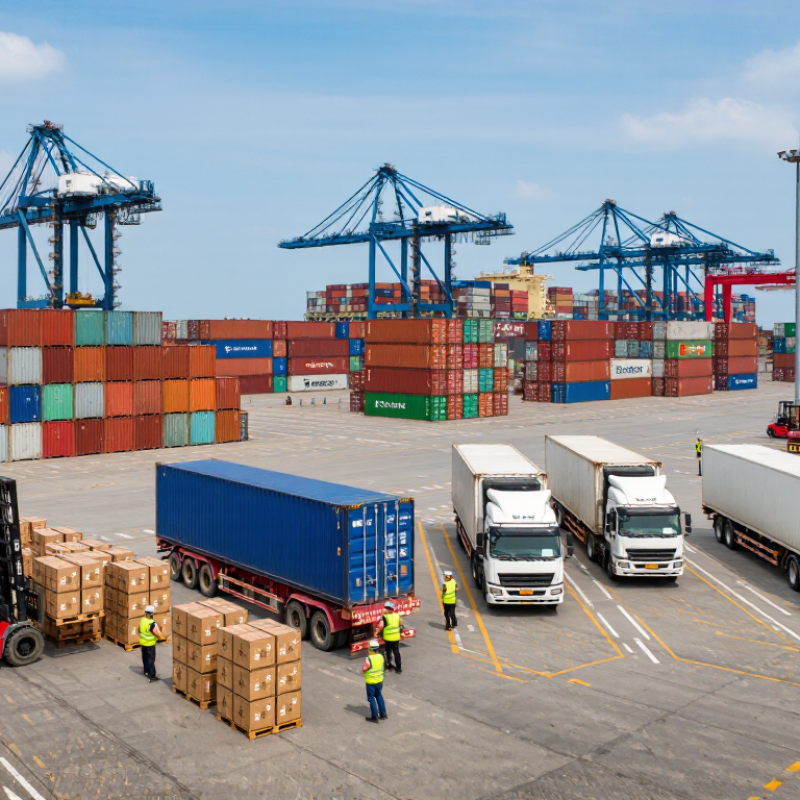
Container transloading is the controlled transfer of cargo between transport modes, often from a marine container to a truck or rail wagon. It differs from traditional warehousing because goods may move through a facility without long-term storage. A dock team opens the container, checks the seal, verifies quantities, and reloads cartons, pallets, or bulk units for inland delivery.
This process matters because modern freight networks depend on speed and flexibility. UNCTAD’s Review of Maritime Transport 2024 reported that global seaborne trade grew by 2.4% in 2023. It also projected further growth in 2024. More ocean cargo creates pressure at ports, yards, and distribution centers. Transloading can reduce container dwell time and match large ocean equipment with smaller domestic vehicles. A practical example is a 40-foot container arriving in the morning. By afternoon, its cartons may be divided among three regional trucks.
Good execution requires more than labor.
Operators need appointment control, accurate inventory scans, damage checks, and clear exception procedures. The World Bank’s Logistics Performance Index 2023 emphasizes reliability, shipment tracking, and timely delivery as core logistics capabilities. Small errors can weaken all three. A missing pallet count may create a delivery dispute later. An unreadable label can delay an entire route.
The model is not automatically cheaper. Extra handling can increase damage exposure, labor costs, and scheduling risk. Poorly planned transloading becomes rushed warehousing. Data visibility also remains imperfect, especially when several transport partners share responsibility. Careful freight profiling, realistic cut-off times, and regular audit reviews make the operation more dependable.
Why Businesses Use Container Transloading Services
What Is Container Transloading Services and How It Works?
Container transloading is the transfer of imported cargo from an ocean container into a truck trailer or rail car. The work usually happens near a port, rail terminal, or distribution center. Workers inspect the shipment, sort cartons, and reload them for inland delivery. A pallet may leave the facility within hours, rather than waiting for direct container delivery.
Why Businesses Use Container Transloading Services
Businesses use this method to improve speed, capacity, and delivery control. The United Nations Conference on Trade and Development reported in its Review of Maritime Transport 2023 that over 80% of global merchandise trade by volume moves by sea. That volume creates pressure at ports and inland facilities. Transloading helps companies move cargo away from crowded terminals faster.
It can also reduce equipment costs. Ocean containers are not always suitable for domestic routes, while trailers and rail cars support inland distribution more efficiently. The World Bank’s 2023 Logistics Performance Index, based on feedback from logistics professionals in 139 economies, identifies shipment timeliness as a major performance measure. Transloading supports that goal, but it is not automatically cheaper. Labor, handling damage, storage, and appointment delays can change the result.
Tips: Confirm carton counts before unloading. Photograph damaged packaging. Use barcode scans at every handoff. Reserve trailers before the vessel arrives. Small mistakes become expensive quickly. Businesses should also compare transloading with direct container delivery during different seasons. A plan that works in calm months may fail during peak demand.
How the Container Transloading Process Works Step by Step
What Is Container Transloading Services and How It Works?
Container transloading moves cargo from an ocean container into another transport unit. It may be a truck, trailer, railcar, or warehouse storage area. The process helps shippers adjust cargo for domestic delivery, regional distribution, or different transport requirements.
The process begins when the container arrives at a transloading facility. Staff check the container number, seal condition, paperwork, and visible damage. They record arrival time and take photographs when necessary. The container is opened in a controlled area. Workers then unload cartons, pallets, drums, or other approved freight using forklifts and pallet jacks. Weight and piece counts are verified against the shipping documents. Small differences should never be ignored.
After unloading, staff inspect the cargo and identify any damaged packaging. They may re-palletize products, apply new labels, or separate shipments by destination. The freight is then loaded into outbound trailers or placed in a secure staging area. Before dispatch, workers check pallet stability, load distribution, delivery details, and required records. A final count follows.
Timing matters.
In real operations, delays still happen. A late appointment, wet packaging, or unclear paperwork can interrupt the plan. Experienced teams reduce these risks through pre-arrival checks and careful communication. However, no procedure is perfect. A rushed inspection may miss hidden damage, while an inaccurate count can cause disputes later. Reliable transloading depends on documented handling, trained personnel, suitable equipment, and honest reporting at every stage.
Equipment, Facilities, and Teams Involved in Transloading
Container transloading moves freight directly between ocean containers, trailers, and local delivery vehicles. It avoids unnecessary storage and can shorten inland transit time. UNCTAD’s Review of Maritime Transport 2024 states that about 80% of global merchandise trade by volume moves by sea. That scale makes efficient container handoffs operationally important.
The facility needs reinforced docks, adjustable ramps, container chassis, forklifts, pallet jacks, and marked staging lanes. Heavy forklifts unload pallets while workers inspect seals, count cartons, and record visible damage. Some sites use weighbridges and barcode scanners. Others still rely on handwritten checks. That creates avoidable errors.
The team usually includes a site supervisor, equipment operators, warehouse handlers, dispatch coordinators, and customs documentation staff. Each role needs clear timing. A supervisor matches container numbers with delivery orders. Operators position loads safely. Coordinators arrange tractors and appointment windows. The U.S. Bureau of Labor Statistics continues to identify transportation and warehousing as major logistics employment sectors, reflecting the labor needed behind automated facilities.
Good transloading also depends on accurate measurements. Teams check weight distribution, pallet stability, temperature requirements, and trailer capacity before release. A rushed transfer can turn one damaged carton into a larger claim. Automation helps, but it does not replace judgment. In practice, exception handling remains messy, especially when paperwork and physical cargo disagree.
What Is Container Transloading Services and How It Works? - Equipment, Facilities, and Teams Involved in Transloading
| Operational Dimension | Typical Data or Requirement | How It Supports Transloading |
|---|---|---|
| Service Definition | Transfer of cargo between an ocean container and another transport mode, usually a truck or railcar, without long-term storage. | Creates a connection between international container transport and domestic distribution networks. |
| Common Cargo Types | Packaged consumer goods, food products, machinery, building materials, paper products, chemicals, and palletized freight. | Cargo characteristics determine handling equipment, safety procedures, packaging requirements, and labor needs. |
| Inbound Transportation | Ocean container delivered by drayage truck or rail from a port, inland terminal, or rail ramp. | Provides the loaded container that will be opened, unloaded, sorted, and transferred. |
| Receiving and Check-In | Appointment verification, container number recording, seal inspection, damage documentation, and shipment confirmation. | Establishes cargo control and identifies discrepancies before unloading begins. |
| Facility Layout | Truck docks, container access lanes, staging areas, floor space, inspection zones, offices, and secure cargo areas. | Allows cargo to move safely from the container to staging and then to outbound vehicles. |
| Dock Capacity | Determined by the number of dock doors, door dimensions, trailer access, yard space, and appointment schedules. | Controls how many inbound and outbound shipments can be processed at the same time. |
| Primary Handling Equipment | Forklifts, pallet jacks, dock levelers, pallet scales, conveyors, hand trucks, loading ramps, and cargo restraints. | Moves, weighs, positions, and secures freight during unloading and loading. |
| Container Access Equipment | Container chassis, reach equipment, yard tractors, dock plates, ramps, and appropriate container-opening tools. | Positions the container and creates safe access for cargo removal. |
| Forklift Capacity | Selected according to the heaviest unit load, load dimensions, aisle width, and floor conditions; capacity must exceed the planned load weight. | Reduces product damage and equipment instability during cargo handling. |
| Staging Process | Freight is grouped by destination, order, customer, product type, or outbound vehicle. | Improves loading accuracy and reduces unnecessary cargo movement. |
| Cargo Inspection | Checks for visible damage, shortages, overages, wetness, contamination, labeling errors, and packaging failures. | Protects shipment integrity and creates evidence for exception reporting or claims. |
| Documentation | Bill of lading, packing list, delivery order, seal information, inspection records, weight records, and exception reports. | Maintains traceability and supports customs, transportation, inventory, and claims processes. |
| Inventory Control | Barcode scans, pallet identification, quantity verification, location records, and shipment status updates. | Prevents misplaced freight and provides visibility during short-term handling. |
| Labor Roles | Operations supervisors, warehouse associates, forklift operators, checkers, dispatch coordinators, safety staff, and administrative personnel. | Coordinates physical handling, documentation, scheduling, safety, and customer communication. |
| Outbound Transportation | Domestic truckload, less-than-truckload, rail, local delivery vehicle, or other approved transport equipment. | Moves the transloaded freight to a distribution center, customer, production site, or another logistics node. |
| Loading and Securing | Load planning, weight distribution, pallet placement, blocking, bracing, straps, airbags, and other approved restraints. | Limits shifting and damage while the outbound vehicle is in transit. |
| Safety Controls | Personal protective equipment, pedestrian lanes, forklift inspections, dock safety procedures, traffic controls, and employee training. | Reduces risks related to moving equipment, unstable loads, dock edges, and manual handling. |
| Special Cargo Requirements | Temperature control, food-grade handling, hazardous-material procedures, oversized-load planning, or secure storage when applicable. | Ensures cargo is handled according to its physical, regulatory, and security requirements. |
| Typical Process Sequence | Appointment scheduling → container arrival → seal and cargo check → unloading → inspection and counting → staging → outbound loading → documentation and dispatch. | Provides a repeatable workflow from inbound receipt to final dispatch. |
| Key Performance Indicators | Turnaround time, dock-to-stock time, unloading rate, loading accuracy, damage rate, labor productivity, dwell time, and on-time dispatch. | Measures service speed, reliability, cost efficiency, and cargo quality. |
| Main Benefits | Reduced storage needs, fewer handling stages, improved mode flexibility, faster domestic distribution, and better use of transportation capacity. | Helps connect international freight flows with regional and domestic supply chains. |
Key Factors for Choosing a Container Transloading Provider
Container transloading moves cargo directly between ocean containers and domestic trucks or rail equipment. It can reduce storage time, but only when the provider controls each handoff carefully. UNCTAD’s Review of Maritime Transport 2023 states that shipping carries over 80% of global merchandise trade by volume. That scale makes small delays costly.
Choosing a provider requires more than comparing hourly rates. Check its proximity to ports, rail ramps, highways, and distribution centers. Ask how quickly it secures appointments and reports container availability. A capable team should provide timestamps for unloading, counting, palletizing, and dispatching. It should also inspect cartons for crushed corners, wet packaging, or missing seals. Clear photographs help. So do documented exception procedures.
Technology matters, but it is not magic. The World Bank’s Logistics Performance Index 2023 highlights the importance of tracking, timeliness, and reliable logistics services. Request dashboard access, electronic proof of delivery, and measurable targets for dwell time and accuracy. Review the provider’s contingency plan for chassis shortages, storms, labor gaps, and sudden volume increases. The 2024 State of Logistics Report estimated U.S. business logistics costs at 8.5% of GDP in 2023, showing why inefficient transfers deserve close scrutiny. A low quote can still be expensive. I would test the operation with a small shipment first, because no scorecard reveals every warehouse weakness.
What Is Container Transloading Services and How It Works?
Container transloading is the process of moving cargo from an ocean container into another transport unit, such as a truck, trailer, rail container, or warehouse pallet system. Container selection affects handling capacity, equipment requirements, warehouse space, and transportation planning.
Key Factors for Choosing a Container Transloading Provider
When comparing providers, consider their ability to handle different container sizes, available loading equipment, warehouse capacity, cargo security controls, turnaround time, and connections to truck or rail transportation. The volumes shown are approximate nominal internal capacities and may vary by container manufacturer and configuration.
FAQS
It transfers imported cargo from an ocean container into a trailer or rail car. The work often happens near a port, rail terminal, or distribution center. Cargo may leave within hours.
Transloading can move cargo away from crowded terminals faster. It supports quicker inland delivery and better capacity control. Speed matters.
No. Labor, handling damage, storage, and appointment delays affect the final cost. Businesses should compare both options during quiet and peak seasons.
Common equipment includes reinforced docks, adjustable ramps, forklifts, pallet jacks, and marked staging lanes. Some facilities also use weighbridges and barcode scanners.
Workers inspect seals, count cartons, check pallet stability, and record visible damage. They may photograph damaged packaging before moving the shipment. Small errors grow quickly.
A typical team includes a supervisor, equipment operators, warehouse handlers, dispatch coordinators, and documentation staff. Clear timing helps each person avoid missed appointments.
Confirm carton counts before unloading. Scan barcodes at every handoff. Reserve trailers before the vessel arrives. Handwritten checks can create avoidable errors.
Paperwork may disagree with the physical cargo. A pallet may exceed trailer capacity or have poor weight distribution. Automation helps, but judgment still matters.
They should reserve equipment, trailers, and appointment windows early. A plan that works in calm months may fail during busy periods. That possibility deserves honest review.
Conclusion
Container Transloading Services play an important role in modern freight operations by transferring cargo between ocean containers, trucks, railcars, and other transportation equipment. This process helps businesses move goods more efficiently when the original container is not suitable for the next stage of delivery. Companies may use transloading to reduce transportation costs, improve delivery flexibility, reach inland markets, consolidate or separate shipments, and manage inventory closer to customers.
The transloading process typically includes receiving the container, inspecting and documenting the cargo, unloading or transferring the goods, organizing them for the next shipment, and loading them onto the appropriate equipment. Successful operations depend on suitable facilities, loading docks, handling equipment, trained teams, accurate scheduling, and careful cargo control. When choosing a provider, businesses should evaluate location, capacity, equipment, safety procedures, communication, reliability, pricing, and the ability to handle their specific shipment requirements.
Blog Tags: