Logistics & Supply Chain Insights
Expert perspectives, compliance updates, and global freight strategies from our team in Los Angeles.
Air & Ocean Freight Intelligence
Stay ahead of regulatory changes, port developments, and market trends.
Customs & Drayage Solutions
Practical advice for optimizing domestic trucking, drayage, and customs clearance.
What Is Full Truckload Shipping and How Does It Work?
Full Truckload Shipping is often described as the simplest way to move freight. One shipper fills one trailer. The truck then travels directly to the receiver, with fewer stops and transfers.
In practice, the process demands careful planning. A shipper confirms the cargo weight, dimensions, pickup window, delivery appointment, and equipment type. The carrier assigns a suitable truck, collects the load, checks the shipping documents, and secures the trailer. A sealed 53-foot trailer may then travel hundreds of miles before reaching a distribution center or store. Real-time tracking can show location changes, delays, and arrival estimates. However, visibility is not always perfect. Weather, traffic, equipment shortages, and loading delays can still disrupt a carefully planned route.
Supply-chain expert Martin Christopher describes the supply chain as “the network of organizations that are involved, through upstream and downstream linkages, in the different processes and activities.” His observation explains why Full Truckload Shipping involves more than placing freight on a truck. It connects shippers, carriers, warehouses, drivers, receivers, and technology platforms.
This guide examines how Full Truckload Shipping works from booking to delivery. It also considers pricing, transit time, capacity, tracking, and risk management. The model can reduce handling and improve schedule control. Yet it is not automatically the best choice. A partially filled trailer may create unnecessary cost. A missed appointment may erase the expected efficiency. Good decisions depend on freight volume, urgency, route length, and operational experience.
Definition and Core Features of Full Truckload Shipping
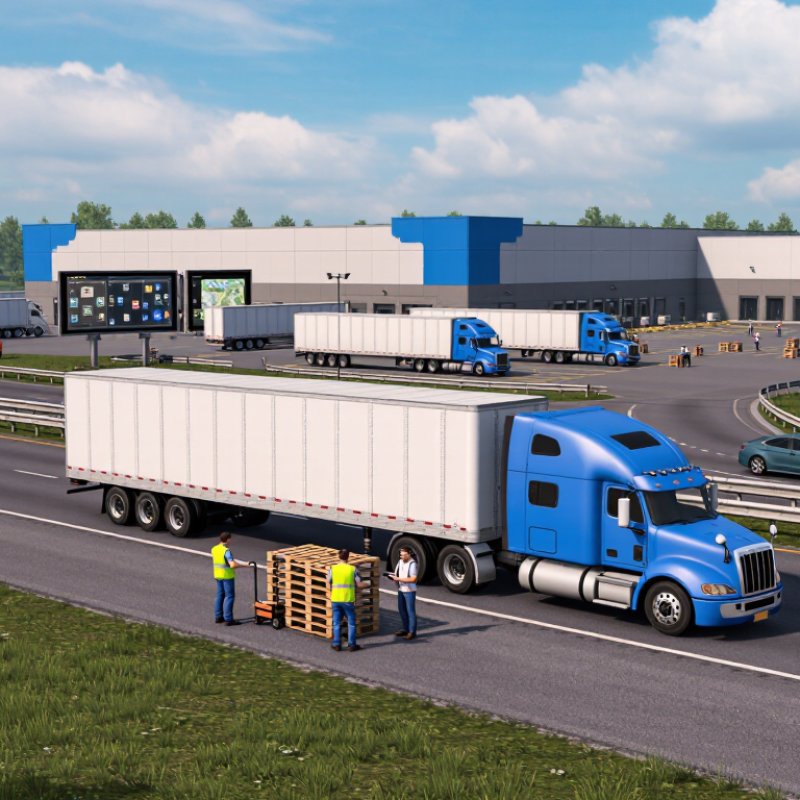
Full truckload (FTL) shipping moves one shipper’s freight in a trailer reserved for that shipment. The truck may carry one large order or several orders from the same shipping party. Unlike shared-load transport, FTL freight usually avoids intermediate consolidation terminals and repeated handling. That distinction matters when cargo is fragile, time-sensitive, or tightly scheduled. The trailer still has unused space sometimes. A full truckload describes the service commitment, not always a completely full trailer.
The process begins when a shipper provides origin, destination, freight details, weight, dimensions, equipment needs, and pickup window. A carrier or logistics coordinator matches the shipment with suitable equipment, such as a dry van, refrigerated trailer, or flatbed. At pickup, workers check the count, packaging, seal, and visible condition before loading. Proper weight distribution and securement reduce shifting during braking and turns. The driver then follows the agreed route, while tracking updates record key events. Delivery normally requires appointment coordination, unloading access, and signed proof of delivery. Small errors matter.
FTL pricing commonly reflects distance, equipment, fuel conditions, lane demand, appointment requirements, and accessorial services. A shipper may pay for reserved capacity even when the freight uses only part of the trailer. Not every load fits. This can make FTL economical for dense or urgent loads, but inefficient for a few pallets. Reliable planning depends on accurate dimensions and honest timing. In practice, pickup delays can disrupt an entire route, so buffer time deserves attention. One overlooked detail is loading readiness: a driver waiting at a closed dock can create avoidable charges. FTL is straightforward in concept, yet execution requires disciplined documents, communication, and cargo checks.
How Full Truckload Shipping Works Step by Step
Full truckload shipping reserves an entire trailer for one shipment, even when the cargo does not fill every space. This method reduces handling and usually supports faster, more predictable delivery. The American Trucking Associations reported that trucks carried 72.6% of domestic freight by weight in 2022. That figure shows why careful truck planning still matters.
How Full Truckload Shipping Works Step by Step
The process begins when a shipper confirms cargo details, including weight, dimensions, pickup window, destination, and equipment type. A carrier then accepts the load and assigns a truck and driver. Before pickup, the shipper prepares the freight, verifies loading instructions, and checks that pallets are stable. At the facility, the driver inspects the trailer and receives shipping documents. The truck travels directly to the destination, with limited intermediate handling. The consignee checks the freight, records exceptions, and signs delivery paperwork. The 2024 State of Logistics Report notes that transportation costs remain a major business concern, so small planning errors can become expensive quickly.
Tips: Build realistic appointment windows. Confirm trailer requirements early. Use weight data, not guesses. Photograph loaded pallets before departure. Track arrival updates, but do not treat estimates as promises. I have seen schedules fail because a loading dock was unavailable. That detail is easy to miss. Fuel changes, weather, and driver hours can also affect timing. One assumption deserves review: a direct truck is not always the cheapest option when cargo volume is low.
What Is Full Truckload Shipping and How Does It Work?
Full truckload shipping reserves the entire trailer for one shipment. The chart shows a typical FTL shipment workflow and the approximate elapsed time commonly allocated to each step.
The process usually begins with booking and carrier assignment, followed by pickup scheduling, loading, linehaul transportation, delivery, unloading, and proof-of-delivery completion. Actual timing varies with distance, appointment availability, traffic, weather, and facility operations.
When to Choose Full Truckload Shipping
Full truckload (FTL) shipping uses one truck for one shipper’s cargo. The load usually travels directly to its destination, with fewer stops and transfers. This setup can reduce handling damage, improve delivery control, and protect time-sensitive freight. It does not require a completely full trailer.
Choose FTL when your shipment occupies most of a trailer. A standard pallet load may need this option if it is fragile, high-value, or difficult to stack. FTL also suits strict delivery appointments, factory replenishment, and long-distance routes with limited tolerance for delay. Fewer terminal visits can make tracking simpler. The truck may depart sooner, too.
Volume is only one factor.
Compare the full transport rate with the cost of shared freight, handling, storage, and possible delays. A partially filled truck can be expensive. That is the catch. Before booking, confirm pallet dimensions, total weight, loading hours, unloading access, and temperature requirements. Clear information helps carriers plan equipment and prevents avoidable rework. In my experience, shippers sometimes choose FTL too early because the trailer feels safer. That assumption can waste capacity. A smaller shipment may need a dedicated truck only when its timing, condition, or handling risks justify the extra cost. Weather, seasonal demand, and appointment changes can still affect performance, so build a realistic delivery window rather than promising an exact arrival.
Key Costs and Pricing Factors in Full Truckload Shipping
Full truckload shipping moves one shipper’s freight in a dedicated trailer. The truck usually travels directly from pickup to delivery, with fewer handling points and less risk of delay. Pricing begins with distance, equipment type, shipment weight, and required delivery timing. A dry van, refrigerated trailer, or flatbed can produce very different quotes.
The American Transportation Research Institute reported an average trucking operating cost of $2.26 per mile in its 2024 Operational Costs of Trucking report. This figure includes fuel, labor, equipment, insurance, maintenance, and administrative expenses. It is a useful benchmark, not a guaranteed market rate. Fuel remains volatile. The U.S. Energy Information Administration recorded an average on-highway diesel price of about $3.76 per gallon in 2024. A longer route, heavy cargo, or fuel surcharge can quickly change the final invoice. Deadhead matters too.
Carriers also price lane balance, seasonal demand, and available capacity. A shipment leaving a busy freight market may cost less than one entering a remote area. Pickup appointments, driver detention, tolls, storage, and special handling can create accessorial charges. Tight delivery windows often carry a premium. Yet a low quote may hide restrictive terms or weak service reliability. That benchmark is not a promise. Shippers should compare fuel assumptions, included miles, cancellation rules, and accessorial schedules before approving a rate. A careful quote still needs review.
What Is Full Truckload Shipping and How Does It Work? - Key Costs and Pricing Factors in Full Truckload Shipping
| Dimension | Typical Full Truckload Detail | How It Affects the Shipment | Pricing Consideration |
|---|---|---|---|
| Definition | One shipper generally reserves the truck’s capacity for one shipment. | The load usually travels directly from the origin to the destination with fewer intermediate handling points. | The shipper commonly pays for the truck capacity or an agreed line-haul rate rather than only the space used. |
| Common Equipment | Dry van, refrigerated trailer, flatbed, step-deck, or specialized equipment. | Equipment selection depends on cargo dimensions, temperature requirements, loading method, and legal restrictions. | Refrigerated and specialized equipment generally costs more than standard dry-van equipment. |
| Typical Trailer Capacity | A standard 53-foot dry van often provides approximately 3,400–3,800 cubic feet of space and up to about 45,000 pounds of usable payload, subject to legal and equipment limits. | Pallet count depends on pallet dimensions, loading pattern, product weight, and required aisle or securement space. | A load that exceeds weight, height, width, or length limits may require special routing, permits, or equipment. |
| Shipment Size | Often suitable for roughly 10–26 standard pallets, depending on pallet size, stacking rules, and cargo weight. | Full truckload is most efficient when the shipment uses a substantial portion of the trailer or requires dedicated transport. | Smaller shipments may have a lower total cost under less-than-truckload or other shared-capacity options. |
| Distance | Local, regional, and long-haul routes are all possible. | Longer routes consume more fuel, driver time, equipment capacity, and operating resources. | Rates may be quoted as a total trip price or calculated using a line-haul rate per mile plus additional charges. |
| Base Line-Haul Rate | The primary transportation charge for moving the truck between the pickup and delivery points. | It reflects route length, available capacity, equipment type, timing, and current market conditions. | A simplified calculation is: Base Rate = Loaded Miles × Applicable Rate per Mile. |
| Fuel Surcharge | An additional charge that adjusts transportation pricing when diesel prices change. | Fuel usage rises with mileage, vehicle weight, traffic, terrain, and idling time. | The surcharge may be based on a published fuel index, a fixed amount per mile, or a percentage of the line-haul charge. |
| Equipment Type | Dry van is commonly used for packaged, non-temperature-sensitive freight; refrigerated and flatbed equipment serve different cargo needs. | Temperature control, open-deck loading, tarping, or special securement can add operational requirements. | Specialized equipment typically has higher rental, operating, handling, and availability costs. |
| Pickup and Delivery Stops | A standard full truckload often has one pickup and one delivery, although additional stops may be arranged. | Extra stops increase loading, unloading, coordination, and waiting time. | Additional-stop charges may be assessed per stop or included in a negotiated total rate. |
| Loading and Unloading | The shipper and receiver are commonly responsible for preparing freight and making loading or unloading facilities available. | Dock access, loading appointments, pallet condition, and cargo readiness influence turnaround time. | Handling services, driver-assisted loading, or special equipment may create accessorial charges. |
| Detention and Waiting Time | Time spent waiting beyond the agreed free time at pickup or delivery. | The truck and driver remain committed while the shipment is not moving. | Charges vary by contract; a common industry practice is to apply an hourly fee after a defined free-time period. |
| Accessorial Services | Examples include liftgate service, inside delivery, driver assist, pallet exchange, reconsignment, and storage. | These services are outside the basic point-to-point movement of the truck. | Each service may have a separate fixed fee or be priced according to the shipment’s requirements. |
| Seasonality | Demand and available truck capacity can change during agricultural seasons, holidays, retail peaks, and adverse weather periods. | High demand or reduced capacity can make it more difficult to secure equipment on short notice. | Rates may rise during tight-capacity periods and fall when more trucks are available than loads. |
| Delivery Urgency | Standard, scheduled, expedited, and time-critical services may be available depending on the route. | Tighter pickup or delivery windows reduce scheduling flexibility and may require premium capacity. | Expedited service, team-driver arrangements, or guaranteed appointments generally increase the total price. |
| Shipment Documentation | A bill of lading normally identifies the shipper, receiver, cargo, quantity, weight, and shipping terms. | Accurate documents support tendering, tracking, delivery confirmation, and freight-claim handling. | Incorrect weights, dimensions, addresses, or service requirements can lead to reclassification, delays, or additional charges. |
| Illustrative Cost Structure | Total cost is commonly built from the base line-haul rate plus fuel and applicable additional services. | The final invoice depends on the shipment details and the terms agreed before dispatch. | Total Cost = Line-Haul + Fuel Surcharge + Accessorial Charges + Applicable Taxes or Fees |
Note: Capacity, payload, service availability, and pricing vary by route, equipment, shipment characteristics, market conditions, contract terms, and applicable regulations. The figures above are general industry guidelines rather than a guaranteed quote.
Advantages, Limitations, and Common Use Cases
What Is Full Truckload Shipping and How Does It Work?
Advantages, Limitations, and Common Use Cases
Full truckload shipping moves freight that occupies most or all of one trailer. A shipper usually books the trailer for one shipment, rather than sharing space with several loads. The carrier collects the cargo, transports it directly, and delivers it with fewer handling points. In practice, this can make scheduling simpler. A typical load might contain 20 pallets of boxed equipment, secured at a warehouse dock and delivered to one distribution center.
The main advantage is speed. Direct movement often reduces transfer delays, damage exposure, and appointment confusion. It can also provide better control for temperature-sensitive goods, fragile machinery, or high-volume seasonal inventory. Pricing may become efficient when the shipment fills the trailer. However, a half-empty trailer can waste money. Fuel, distance, and equipment costs still apply. That is an easy mistake for new shippers.
FTL has limits. It usually requires enough freight to justify dedicated capacity, plus loading space and a firm delivery window. Rural pickups, narrow delivery appointments, or sudden volume changes may reduce available options. It suits factory replenishment, retail distribution, construction materials, and planned warehouse transfers. A logistics manager should compare pallet count, cube, weight, urgency, and unloading requirements. Actual trailer use matters more than hopeful forecasts. Even then, forecasts can be wrong. A flexible plan may outperform a seemingly cheaper booking.
FAQS
Full truckload shipping reserves an entire trailer for one shipment. The cargo may not fill every available space.
The shipper confirms weight, dimensions, pickup time, destination, and equipment needs. Accurate details reduce costly planning mistakes.
The shipper prepares the freight and checks pallet stability. Loaded pallets should be photographed before departure.
The truck usually travels directly to the destination. Fewer transfers can reduce delays, damage exposure, and appointment confusion.
The driver checks the trailer and receives shipping documents. The shipper should verify loading instructions before departure.
It suits factory replenishment, warehouse transfers, construction materials, and seasonal inventory. It also helps with fragile machinery.
No. A half-empty trailer can waste money because fuel, distance, and equipment costs remain.
Weather, fuel changes, driver hours, and unavailable loading docks can affect timing. Estimates are not promises.
Compare pallet count, cargo volume, weight, urgency, and unloading requirements. Actual trailer use matters more than hopeful forecasts.
Assuming direct transport is always the cheapest option can be wrong. A flexible plan may work better. Recheck the forecast.
Conclusion
Full Truckload Shipping is a freight transportation method in which one shipment uses the entire capacity of a truck, either because the cargo requires the available space or because the shipper prefers a direct, dedicated journey. Unlike shared-load transportation, it generally involves fewer stops, simpler handling, and a more predictable transit process. The process typically includes confirming shipment details, selecting suitable equipment, booking a carrier, loading and securing the cargo, transporting it directly, and completing delivery documentation.
This option is often suitable for large, time-sensitive, fragile, or high-volume shipments. Pricing usually depends on distance, cargo weight and size, equipment type, fuel costs, market capacity, seasonality, pickup and delivery requirements, and accessorial services. Full Truckload Shipping can offer faster delivery, lower handling risk, better shipment visibility, and improved scheduling control. However, it may be less economical for small loads because the shipper pays for dedicated truck capacity. Common uses include manufacturing materials, retail replenishment, agricultural goods, construction supplies, and other commercial freight that benefits from direct transportation.
Blog Tags: