
CE Certified FCL Ocean Freight Portfolio
Explore our top-tier Full Container Load (FCL) shipping services, door-to-door DDP solutions, and specialized logistics for industrial and commercial exports.
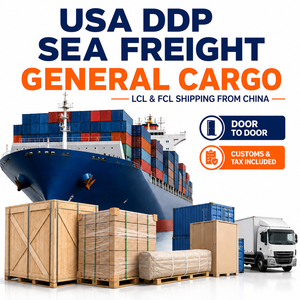
USA DDP Sea Freight For Oversized Cargo Door To Door Shipping
Send an Inquiry
Ocean Freight Shipping Agent: China to USA, UK, EU, UAE & Oman
Send an Inquiry
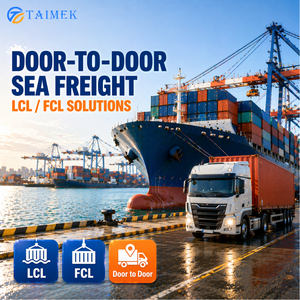
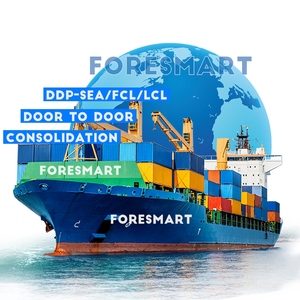
20ft & 40ft HQ FCL Container Shipping to North America & Europe
Send an Inquiry
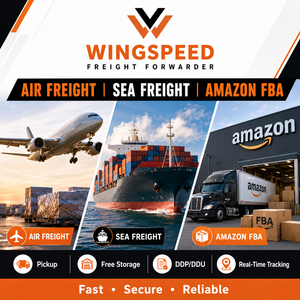
Reliable Sea Freight China to UK LCL/FCL DDP Door-to-Door Forwarder
Send an Inquiry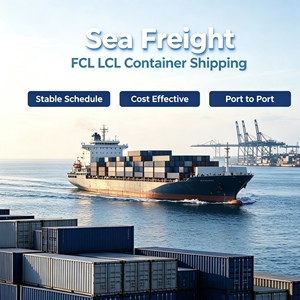
Full Container Load (FCL) Logistics Architecture & CE Compliance Engineering
In the contemporary global supply chain ecosystem, procuring Full Container Load (FCL) shipping services from certified exporters represents more than simple space reservation on an ocean vessel. It is a highly specialized engineering workflow that intersects international maritime law, port operations, structural cargo securing, and strict regulatory compliance—specifically the European Health, Safety, and Environmental protection standards denoted by the CE Mark (Conformité Européenne).
Selecting full container load shipping over Less than Container Load (LCL) provides distinct structural advantages for high-value enterprise cargo:
Integral Cargo Security & Zero Co-Loading
FCL shipments remain sealed from origin stuffing to destination un-stuffing. This mitigates risks of mechanical damage, contamination, and unauthorized handling inherent in shared LCL consolidation warehouses.
Optimized Transit Velocity
Bypassing Container Freight Station (CFS) consolidation and deconsolidation saves 3 to 7 operational days at both load and discharge ports, providing predictable berth-to-gate vessel transit schedules.
CE Documentation Integration
Certified FCL exporters issue consolidated Master Bills of Lading (MBL) tied directly to technical dossiers, CE Certificates of Conformity, and Commercial Invoices, preventing customs detention in European ports.
Standard FCL ISO Container Specifications for International Export
| Container Spec | Internal Dimensions (L x W x H) | Max Payload Capacity | Cubic Capacity | Optimal Cargo Application |
|---|---|---|---|---|
| 20' General Purpose (GP) | 5.90m x 2.35m x 2.39m | 28,200 kg | 33.2 CBM | Heavy industrial raw materials, dense machinery, steel coils |
| 40' General Purpose (GP) | 12.03m x 2.35m x 2.39m | 26,600 kg | 67.7 CBM | General consumer goods, electronics, non-bulk industrial equipment |
| 40' High Cube (HC/HQ) | 12.03m x 2.35m x 2.69m | 26,580 kg | 76.4 CBM | Volumetric machinery, oversized packaged plant equipment, textiles |
| 40' Open Top / Flat Rack | 12.03m x 2.35m x (Variable) | Up to 40,000 kg | N/A (Out of Gauge) | Over-dimensional CE-certified industrial lines, heavy generators |
Regulatory Compliance: The Intersection of CE Certification & Maritime Export
Exporting manufactured goods into the European Single Market or countries recognizing CE harmonized standards requires strict adherence to mandatory European Union regulations. When shipping via FCL, freight forwarders and exporters must harmonize maritime physical logistics with legal CE regulatory documentation.
Essential Compliance Protocols for CE-Certified Exporters:
- Declaration of Conformity (DoC) Alignment: The technical description, HS Tariff Codes, and serial number registries on the CE DoC must match the Master Bill of Lading (MBL) and packing lists precisely to avoid border control rejection.
- EN ISO 12100 & Cargo Securing Standards: For CE-certified industrial machinery, container stowing must adhere to IMO/ILO/UNECE Code of Practice for Packing of Cargo Transport Units (CTU Code). Machinery must be anchored against longitudinal forces up to 0.8g during maritime transit.
- Battery & Dangerous Goods (DG) Regulations: Machinery containing lithium-ion units or integrated electronic panels requires dangerous goods declaration (IMDG Code) in tandem with CE battery directive compliance (2006/66/EC).
Future Procurement Trends in Global FCL Shipping (2025–2030)
The international freight forwarding landscape is undergoing a structural paradigm shift driven by digital decarbonization, geopolitical realignment, and advanced predictive analytics. Procurement directors and supply chain executives must adapt to several macro trends shaping FCL containerized shipping:
1. Decarbonization & IMO 2030 Green Shipping Corridors
Ocean carriers are implementing bio-methane, green methanol, and dual-fuel propulsion engines to comply with the International Maritime Organization (IMO) carbon intensity targets. Exporters providing verified Carbon Offsetting and CII (Carbon Intensity Indicator) reporting for FCL ocean shipments are gaining major commercial advantages with ESG-focused European buyers.
2. Smart Containerization & Real-Time IoT Telematics
Modern FCL export strategy utilizes IoT-enabled container monitoring systems. Importers no longer rely on static AIS tracking; smart sensors record real-time internal temperature, humidity levels, shock impacts, door-opening alerts, and precise GPS coordinates via satellite links.
3. Automated Customs Brokerage & Electronic Bill of Lading (e-BoL)
With the global transition toward UNCITRAL Model Law on Electronic Transferable Records (MLETR), digital e-BoLs are replacing physical paper documents. This speeds up trade finance releases under Letters of Credit (LC) and enables instant customs pre-clearance prior to vessel arrival.
4. Reshoring, Nearshoring & Multimodal Corridor Expansion
Trade lane diversification has increased demand for flexible FCL intermodal solutions. Exporters are leveraging combined Ocean-Rail-Road networks (such as China-Europe Railway Express and U.S. Transcontinental Intermodal Drayage) to optimize transit times amidst maritime choke-point disruptions.
Corporate Infrastructure: Why Choose Our Freight Network?
Leveraging over two decades of operational excellence, our freight forwarding organization provides an integrated global logistics framework tailored for industrial manufacturers, traders, and enterprise importers worldwide. Drawing from our Los Angeles logistics hub and international partner network, we deliver unmatched operational reliability.
TSA-Approved Carrier & Regulatory Authorization
As a TSA-approved international freight forwarder, our security protocols, air freight handling, and port access comply with federal security guidelines, facilitating expedited clearance for high-priority shipments.
In-House Licensed Customs Brokerage
Our licensed customs brokerage team manages complete import and export documentation, tariff classification (HTS), duty drawback, and CE documentation validation, ensuring zero customs holds.
End-to-End Container Drayage & Transloading
We operate specialized drayage fleets and transloading warehouse facilities near key port hubs (including Los Angeles, Long Beach, Hamburg, and Rotterdam), allowing instant container devanning and nationwide inland distribution across all 48 U.S. states and European inland terminals.
Comprehensive Marine Cargo Insurance
Protecting capital investment requires robust coverage. We offer full-value Institute Cargo Clauses (A) insurance, shielding your FCL ocean shipments against general average, maritime peril, and physical loss from origin warehouse to final delivery point.
Frequently Asked Procurement & Logistics Questions (FAQ)
Q1: What is the primary operational difference between FCL and LCL shipping for CE-marked equipment?
FCL (Full Container Load) dedicates an entire ocean container exclusively to your cargo, eliminating physical handling between origin loading and destination unloading. For CE-marked industrial machinery, FCL guarantees that calibrated equipment, delicate sensors, and certified assemblies are not subjected to re-stacking or co-loading with hazardous third-party freight.
Q2: How does a CE-certified FCL exporter ensure seamless customs clearance in European ports?
A specialized exporter verifies that all items inside the container carry appropriate CE marking and are accompanied by an accurate Technical Dossier, EU Declaration of Conformity (DoC), and matching commercial documentation. Customs declarations (SAD / Single Administrative Document) are pre-filed electronically via NCTS before the vessel berthes.
Q3: What are the transit time expectations for FCL container shipping from major Asian ports to the US and Europe?
Direct fast-boat ocean services from major Asian ports (e.g., Shanghai, Ningbo, Shenzhen) to US West Coast ports (Los Angeles/Long Beach) typically range from 11 to 16 transit days. Direct water routes to European base ports (Rotterdam, Hamburg, Felixstowe) range from 28 to 35 transit days, depending on carrier routing and canal transits.
Q4: How are Demurrage and Detention charges calculated, and how can they be prevented?
Demurrage applies to containers held inside the port terminal beyond free days, while Detention applies to containers held outside the port past the agreed return window. We mitigate these costs by securing extended free-time agreements (typically 10 to 14 days) and utilizing agile container drayage fleets for immediate port retrieval upon vessel discharge.
Q5: Can DDP (Delivered Duty Paid) terms be applied to high-value FCL container shipments?
Yes. Under DDP terms, the exporter assumes complete financial and operational responsibility, including ocean freight, origin/destination port handling, import customs clearance, payment of import VAT and duties, and final inland drayage delivery straight to the buyer's facility door.
Q6: What specialized container options are available for heavy or oversized CE-certified machinery?
For cargo exceeding standard container dimensions or payload limits, we deploy Open Top (OT) containers for top-loading via crane, Flat Rack (FR) containers for out-of-gauge (OOG) width/height machinery, or Heavy-Tested 20ft GP containers rated for heavy concentrated loads.
Optimize Your Global FCL Supply Chain Today
Partner with a trusted, TSA-approved international freight forwarder. Contact our engineering team for customized ocean freight routing, CE compliance support, and instant competitive container rate quotes.